Tearing Down the Walls

“All gardening is landscape painting.”- William Kent

Every year, I try to add a little something new to my gardens. I pour over catalogs, magazines, websites looking for inspiration. Sometimes though, Mother Nature forces you to embrace and enact change.

One of my projects this year- the garden where our mailbox stands. Super Storm Sandy split my Japanese Sagging Maple in two. The tree stands over six feet in height and at that time was well over 8 feet in circumference. I cut off the dead portion of the tree and a gapping hole was left in its place. I know in several years the hole will be closed but in the meantime I had to reinvent the space. I still have to balance the tree out- that will be my next project.

image

I decided to add this year a small trellis border fence to that garden. Was it a psychological thing in terms of “protecting” the tree? Who knows, I was at Lowes and I just fell in love with it.

I was proud of my little border fence.
image

It was different and no one in my neighborhood had something like it out front. Even my husband who is not the gardening type said he liked it without even the solicitation of his opinion. That to me is the ultimate compliment because I never asked.

image

Now that my Quanson Cherry Tree is in its the final stages of its pink petals falling, I decided it was time to mulch that area.
image

Embracing the change I added 8 cubic feet of black mulch underneath the tree because now you can see under it. I also added some plants for a splash of color. I was happy to see the landscape evolve once again. Little did I know that my little project would inspire someone else.

Normally when you put up a fence or border its to keep people or pests out. My little border on the other hand invited a new person in.

I’m pretty lucky where we live. All of my neighbors on the block know each other. We say hi, offer recipes, invite each other to parties, help each other in emergencies, etcetera. This friendliness extends beyond my street– no matter where you are in the neighborhood we all say hi to each other as we walk our dogs, take our bike rides and walks. It reminds me of the Southern way of life.

Because of this, it didn’t surprise me when a person I didn’t know said hi. She then commented on my new border fence saying she loved it and wanted to know where I got it. The conversation then blossomed into other topics, the fact she’s been here for two years, has two sons, education as well as looking for inspiration on what to do with a crushed rock covered area. She was thinking of a fire pit for her teens and didn’t know what to do. I invited back to what my kids call “mommy island” and showed her my backyard project.

image

There we traded DIY project ideas as well as which flowers to plant to avert mosquitos.

I told her about my success of rosemary, marigolds, lemon grass and citronella plants. If you are like me when it comes to mosquitos, I am a smorgasburg for those blood suckers. No matter what I put on, they attack me. Maybe its my tasty Sicilian blood :) So far though, the skeeters have not been prevalent in the backyard. I hope it’s the plants because in the front yard where those plants are not present, I get ambushed by those stinkers. :)

After ten minutes, every day life interrupted. The alarm on her phone went off to remind her to put laundry in the dryer and my kids were yelling for me. It was nice to connect with a new person. Who knew that a structure designed to keep people and pests out opened the door to a new acquaintance.

For those who have read my books know I love quotes. I found this one and thought it summed up my passion for gardening to a tee–

“Enjoyment of the landscape is the thrill.”- David Hockney

image

Leave a Comment

Filed under Uncategorized

DIY Addict Faces Biggest Challenge Yet- Relaxation

It’s a common comment from my husband every weekend in the Spring. “Just relax, do nothing”. I look at him, smile and go onto my next DIY project telling him I am relaxing as I’m digging a trench to lay down pavers. After 19 years together, he has learned that no matter how crazy he thinks I am in the Spring, he just lets me tackle my next outdoor project so I can check it off my beloved To-Do List.

Maybe it’s my way to get out all that extra energy pent up in me after a long, cold winter, but the urgency of getting outside pushes me into overdrive to complete projects. This is how I use my “me” time. Now, don’t get me wrong, I get massages, manicures, have my wine by the fire pit area (which I created of course), but being in the dirt is a rush for this chica.

I’m a major Type A personality- always on the go and I love lists. The satisfaction I get when I can check off something is indescribable for this list geek. If you are one of my Facebook friends reading this you’ll see my weekend warrior projects around my property posted all the time :)
paths

I’m always “doing” something. I love the rush completing something gives me. I am not a wife who tells her husband, I want something make it for me. I do it myself. If I break a nail or two along the way life goes on. When I met DIY Networks Matt Blashaw I was pumped. The guru of backyard transformations in my book :)
Matt Blashaw

I genuinely love to be active. Either putting in new paths up the hill in my backyard to writing two books at the same time (yes, two books for two different publishers). I find being busy relaxing. But part of this weekend I did something out of my comfort zone, something that is never on my To-Do List- nothing during the day. I made my husband proud but to be honest it was weird. For years I have associated project completion with relaxation. Could I break this correlation?

What helped me slow down was a nasty cold (thank you allergies). I sat on my back deck, listened to the birds and read a book. I looked at the projects I wanted to do and didn’t do them. They were calling my name but I didn’t respond. Instead I traded in my shovels for a cup of espresso and relished in the zen rocking on my glider gave me.

Trust me there is a list of Spring project’s that I’m dying to do (a potted flower tower that I’m creating, painting a bird bath, a small fountain to construct as well paint an old patio set to match the new one we got).

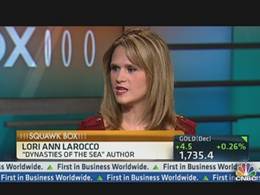
I think my Type A personality got kicked into high gear after having three kids. As a busy mom whose children play travel hockey, baseball and a competitive equestrian, I am always going. My busband and I “divide and conquer” the sports schedules. The week is a blur of activities with home cooked meals (I’m not a big fast food person) and a dash of breaking news in the night hours to book guests for my show “Squawk Box”.

I’m a firm believer in having it all. You just have to work a little harder in order to achieve it. Everyone defines success a little different. For me, it’s about balancing work and family. Yes it’s hard, but who said life wasn’t? It is very hard, do I succeed all the time? Hello no, but I try. Life is about inspiration. Life is a journey where you never stop learning about yourself and where you pay back in some way. For me, I try to pay back by sharing my experiences with others.

I am inspired by people in how they approach situations, the strategies they employ in order to achieve their goals and I realized after being a mom, I use those same billionaire strategies albeit on a much small scale in my every day life.

One of the most frequent questions I am asked when I do speaking engagements as well as from students from my Alma Mater, S.U.N.Y. Plattsburgh (where I’m on the Alumni Board) is about leadership strategies, time management and what have I learned from the likes of Shipping Magnate Roberto Giorgi to real estate titan Richard LeFrak. I always talk about creating your life list on what you want to achieve, seizing the moment, knowing your strengths and weaknesses, never give up, etc. But this weekend I used a trait that many of my contacts use and in my fast pace life haven’t always utilized as much as I should and that’s- just be.

So this weekend I have added a new number one To-Do on my list: Relax. I can check it off as completed and you know what? It wasn’t that bad. It was definitely hard work for this go-getter. But I think with a little more practice, I’ll get more comfortable with letting the dust settle.

Although confession time- I just had to do a little planting. My planter tower. Hey, I was feeling better :)

My triple planter tower

Baby steps people, baby steps :)

3 Comments

Filed under Uncategorized

Lloyd’s List Review

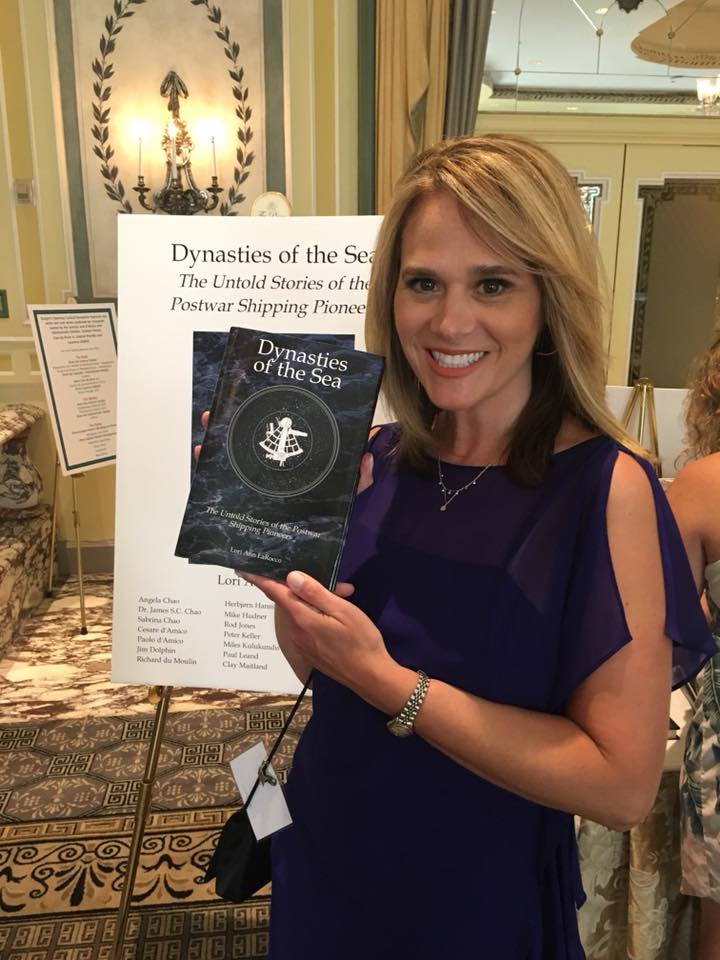
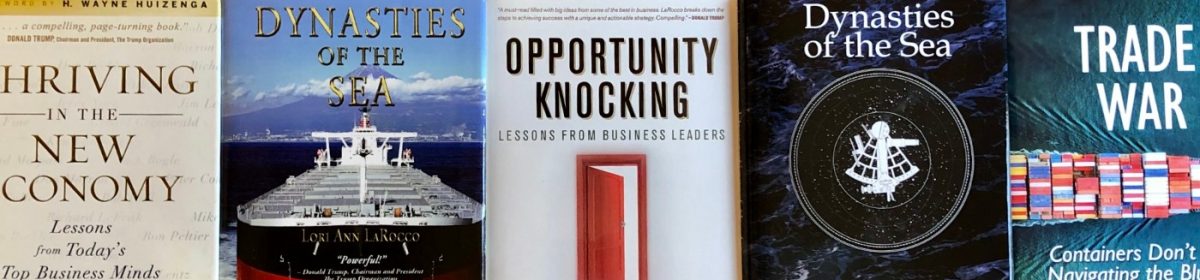
“Dynasties of the Sea” has been out since November and it warms my heart when I have people who email or meet with me telling me that they loved my book and the stories of these individuals have inspired them or have helped them understand an industry that is not in the mainstream media. My amazing publisher Marine Money International sent me this book review by the prestigous Lloyd’s List and I just had to share :)

In conversation with maritime’s leading personalities• Friday 19 April 2013, 16:30
• by David Osler
LaRocco: a succession of potted biographies of some of the big names in this business.
Dynasties of the Sea by Lori Ann LaRocco

IS IT possible to write an insightful book on shipping and ship finance that qualifies as a page-turner, unimpaired by the sort of leaden prose that typifies academic volumes on theses subjects?
Step forward Lori Ann LaRocco with Dynasties of the Sea, which offers a succession of potted biographies of some of the biggest names in this business, all written from the point of view of a savvy outsider.
Twenty major players are given the treatment by the US television journalist, perhaps best known for her role as a producer on CNBC’s flagship business show Squawk Box.
Rather than grilling her subjects in the manner of a long-time shipping specialist writer probably, Ms LaRocco instead approaches the task by posing the questions that an intelligent layperson would ask.
As is almost inevitable for an American author, she eschews typically British understatement for a jauntily upbeat tone, accentuating the positive in a manner that makes her words remarkably easy to digest.
Given that a large part of the book’s target audience will know many of those featured personally, many will come away with the feeling of eavesdropping on private conversations with figures they admire, or conversely, to whom they secretly do not warm.
Shipping rock stars such as John Fredriksen, Andreas Sohmen-Pao, Gerry Wang, Robert Bugbee and Roberto Giorgio are interrogated on their life stories and leadership styles, in a manner designed to elicit easy takeaways.
There are also profiles of key financial figures, not least Wilbur Ross, Michael Parker and Dagfinn Lunde, which demonstrate the inevitable differences in the outlook of those that operate ships and those that lend out the money to enable them to do so.
The chapter on Morten Arntzen, which must have been written only a few months prior to OSG’s decision to seek Chapter 11, is a salutary reminder that one can move from hero to zero with frightening rapidity.
But what provides the thematic unity is the reality that shipping is an industry like no other, with more than its share of big personalities that deserve far more of a spotlight in the mainstream media.
And there is the additional fun of wondering which strong egos Ms LaRocco has left fuming by leaving them out. Perhaps she should already be planning volume two.
Anyone new to shipping is sure to learn much, making it an ideal primer prior to ploughing into the collected works of Martin Stopford, and even those who have been around the block will pick up nuggets of which they were not previously aware.

1 Comment

Filed under Uncategorized

The Theft of “Black Gold” on the High Seas

Pirates have been romanticized in the movies and books for years, but the reality of these individuals is anything but sexy or exciting. Recently at the distinguished Heidmar Marine Forum, I had the privilege of speaking on a panel talking about America’s Energy Revolution. While sitting in the audience waiting for my panel to begin, I listened to a very sobering topic- the Piracy in West Africa. The panel was so riveting it compelled me to write a column about it.

For thirty minutes you could hear a pin drop as Nikos Zannos, Claims Manager of Grace Management S.A. took the audience back to when they found out their vessel, the Orfeas was hijacked off of Abidjan, Ivory Coast on October 6, 2012. It was the second piracy incident in the past week at that time in West Africa. The cargo they wanted? Gasoline. The vessel which sails under the Bahamas flag was carrying 32,068 tons of gasoline. The crew had two shipments to offload, but the tanker disappeared before unloading her second shipment.

Zannos spoke in detail about the search for the vessel and the 24 crew members on board and the fear for the crew’s well being. The enormous tanker simply vanished. Finally on October 9th, the pirates released the ship and her seamen but not before 2,600 metric tons of gasoline were stolen. The destination of the gasoline- the black market.

Unfortunately the story of the Orfeas is not an anomaly. While hijackings in East Africa are going down, on the West Coast, the number of incidents have been steadily increasing.

According to Intertanko (the International Association of Independent Tanker Owners) in 2011 there were 37 attempted incidents and 10 hijackings, in 2012, 40 attempted incidents and 10 hijackings and so far in 2013, there have been 7 attempted incidents and 5 hijackings. “We are not sitting idly by,” said Joseph Angelo, Deputy MD of Intertanko before the packed room, ” We are trying to protect our members…..The situation is far worse in North Africa. The pirates want the fuel. They are ruthless.”

Angelo explained in his presentation at Heidmar these hijackings are now being called “Extended Duration Robbery” (EDR), because ships are now being taken for longer period of times and crew members are being taken for ransom.

To help shine a spotlight on the problem, the members of Intertanko recently sent a letter to the IMO Secretary General requesting the matter to be brought to the attention of the UN Security Council. They are patiently waiting for an answer.

The United Nation’s Office on Drugs and Crime, which helped the maritime industry with the Somali piracy problem recently released a February 2013 report on the growing problem in West Africa. “….the Nigerian navy has estimated that there have been ten to 15 attacks every month in recent years, and that the monthly tally can rise as high as 50.”

The number of pirate attacks is at the center of dispute with one group saying the number is a lot higher. The International Maritime Bureau (IMB), has said the real number of pirate attacks is at least twice as high as the official figure of 129.

According to the U.N. report about three-quarters of these attacks are simple robberies, with the pirates netting very little for themselves. Amounts have been valued at $10,000 to $15,000 per attack. The theft where they get the big bucks? Petroleum products.

Thousands of gallons have been reported stolen and sold on the black market and according to Lloyd’s estimates, the oil losses are between $2 million to $6 billion a year.

The theft of petroleum products are being done in two different ways:

* “Bunkering” where the oil is stolen directly from pipelines and it is then crudely refined, and sold in local and international markets.

* Or commandeer the ship, take the vessel out to open water and offload as much refined gasoline as they can into one of their barges and sell it on the black market.

Shell Petroleum Development Co. of Nigeria Ltd. which is the largest producer of Nigerian oil recently projected losses around 60,000 barrels each day due to oil theft. “We have now witnessed a significant upsurge in the activities of crude oil thieves. The situation in the last few weeks is unprecedented. The volume (of crude oil) being stolen is the highest in the last three years. Over 60, 000 barrels per day from Shell alone,” said Mutiu Sunmonu, the Managing Director of Shell Petroleum Development Company of Nigeria Limited, to journalists on March third.

Sunmonu also warned about the oil thieves growing sophistication. “Over time, this whole crime has got a lot more sophisticated and you could see that the perpetrators are now setting up barge building yards; they are setting up storage facilities; they are setting up tank farms for storing the crude oil, prior to shipping out,” he said.

Here’s a link to a riveting Aljazeera report where a reporter interviewed oil thieves. The pirates have no qualms showing the reporter the process in how they refine the products.

http://www.aljazeera.com/video/africa/2012/08/20128375348592471.html

As you can see from the oil spilling everywhere, getting their hands on refined fuel would be more attractive to the oil thieves. This is why ship owners tell me they are seeing more activity along the West Coast of Africa.

“Refining the crude to get a clean cargo such as gasoline is the real
problem for the pirates as you can see from the Aljazeera story
exactly what I mean.” said Brian Van Aken, Operations Director at Heidmar, “This is what’s driving the new threat from piracy, namely attacking ships and stealing cargo.”

In 2009 the threat of piracy changed for Van Aken when one of their crew members was killed in a robbery off the coast of Benin. “From that time, we have seen the increase in violence throughout the region which has seemed to trickle down from MEND activities to disrupt oil production on land.”said Van Aken. “There is no government control within Nigeria and in fact, the level of corruption is so high, we’ve no doubt that there is any will to curb this ongoing threat. Without outside intervention, the risk to our crews will only escalate and more lives will be lost.”

One ship owner at the conference told me since the pirates come from specific tribes they counter a possible attack, by hiring the pirate’s rival tribes to protect their ships. These hired guns are armed with poison arrows.

I have been told by numerous ship owners the West African pirates are far more violent than the Somali pirates. Ships owners gave heart breaking accounts of members being killed and tortured (for example Pirates shot a mate dead when they first got on a vessel and in another incident they stripped one crew member naked and chained him out on the deck of a tanker for one week exposed to the harsh sun and elements.)

Just in the last several weeks two vessels were released from pirates– one tanker and one bulk where 17 hostages were held since 2010.

One ship—The Iceberg One which came from Germany (owned by a Dubai company) was released at the end of December after almost three years at the hands of the pirates. Two people were killed.

Roberto Giorgi, President of V. Ships, a “Dynasties of the Sea” participant is a well-known advocate for maritime merchants and is one of the industry’s loudest voices on the growing problem of piracy. Giorgi shared these photos of the release of the crew of the Savina Cayln with me. They were given to him by the Master of the Savina Caylyn.

The Savina Caylyn is an oil tanker owned by by the Italian shipping line Fratelli D’Amato. It was hijacked by Somali pirates on February 8, 2011 and then on December 21. 2011 the ship was released after reports of a ransom being paid and long negotiations.

The photos showcasing the joy of the released crew members speak for themselves.
image

image

image

With images and video like this, one wonders why the mainstream media has not shined a spotlight on this growing problem.

image

5 Comments

Filed under Uncategorized

“Dynasties of the Sea” Continues to Make Waves

I continue to be amazed at how “Dynasties” has been picked up around the world. Two days in a row the book has been referenced on the relevancy the book has today since it’s November release.

At a time where political indecision and the blame game and pr campaign to blame the other party is the status quo, a reader posted on <a href="” target=”_blank”>Ships Nostalgia’s discussion board my favorite leadership quote on the need for politicians to rise above, put politics aside and make the right decisions because they are right for the country. Washington, are you listening?

Today, a reader from Mexico tweeted out a blog on his assessment of the book. I translated it below :) As a journalist it’s my goal to give reader’s access to some of the world’s most interesting business leaders. It’s a literary journey I’m glad people are enjoying :)

Blog finance Mexico
Business issues in Mexico

Promise is a debt, and although quite late, I share my review on Dynasties of the Lori Ann LaRocco to be. The Shipping industry is responsible for 95% of world trade. As a consequence, economic growth is strong mind linked the ability of different types of boats to move raw materials and finished goods from one side of the world to the other. It is estimated that the annual value of goods transported by sea to reach $1 trillion USD distributed in 9 billion tons of cargo. The intention is to present this time an overview. In the following entries, I will speak in more detail different companies which is discussed in the same.——Dynasties of the Lori Ann LaRocco is represents a valuable compilation about the vision and strategy of the leaders of the global maritime industry-related businesses. The exhibition includes from the owners of the boats, through financial institutions that support them, and to the companies that provide the operation through the capital human. The profile of respondents includes entrepreneurs that they created a million-dollar business from scratch, heirs of multinational and financial empires that have supported industry through traditional schemes (Bank loans) and innovative (private equity), representing banks and investment funds.The contributions of the people interviewed in the book are definitely appropriate, technically correct and relevant to any person who is related to the marine industry. Of course comments are very executives with trends to the macro of business, does not however diminish les nowhere transcendence. The common denominator of the contributions could be summed up in the following principles: it is a long-term business, called supply and demand, acknowledges the cyclical business: sell high, buy in the low, people are the most important asset, invests in the management team, not you fall in love with your ships, works hard and interact with the environment.Some of the representative industry thoughts are Martin Stopford, Director of Clarkson Research “Shipping is like poker.” “Rules are simple, but is very difficult to win”, as well as the quote from Jim Tisch, Loews Corporation “would how do you make a small fortune in shipping? “Start with a big one”. In other words, is an industry difficult and demanding, but with an addictive quality, which causes its members to establish a personal relationship with the same cause to remain in the good and the bad.The only contribution that I believe that it is timely, that operation marina is full of inefficiencies and imponderables – often caused by the arrogance of the perpetrators and actors leading-nowhere in the book reflects this fact. I think that it is strategy, not by ignorance of the interviewees. It is a thankless operation without a doubt, however as mentioned by Matt McCleery (attributed to Bill Crawfors), “there is only one way out [of the shipping industry]… feet first”.

2 Comments

Filed under Uncategorized

Translated Croatian Post on “Dynasties of the Sea”

Marine Money’s Sarah Noonan came across this blog on Dynasties from Croatian economist, Nenad Bakic. I translated it thanks to Google Translate :) here is the link to the original blog post. Below is the English translated version :)
http://trzistakapitala.wordpress.com/2013/02/01/dynasties-of-the-se-i-hz-cargo/
Dynasties of the Sea and HZ Cargo
Posted on 01.02.2013. 9:40 | 90 Comments

Just yesterday I finished reading an extraordinary book Dynasties of the Sea (released two months ago) when that’s news Duro Dakovic – expressions of interest in participating in the restructuring of the Croatian Railways Cargo. Seemingly different things, but very much related.

First Dynasties of the Sea is a book you should definitely read:
- All investors in the shares of Croatian ship
- Business leaders
- In general, people who are interested in how the world works today.

Truly impressive witness the most important people in the shipping industry today, written smooth and fun, and here’s part of the preface and introduction:

This explosion in world trade was one of the main reasons that more than a billion people joined the world middle class. It provided employment for workers in developing countries and lower prices – and therefore higher real wages – for workers in developed countries. A good portion of the world’s merchandise trade also flows in the reverse direction as coal and iron ore from Australia and airplanes produced by Boeing and Airbus find their way to the developing world. The improvement in the quality of life is beyond measure in places where electricity never touched lives until nowand where access to air travel has expanded to hundreds of millions in places where it had previously been enjoyed by a small, privileged elite.

It takes a special combination of self-confidence and optimism to be a shipowner – to sell ships when they’re making money, buy them when they’re losing money, build brand new ones just when the world has too many – and put a breathtaking amount of one’s own capital at risk in a business that is inherently perilous.

And then there is the lifestyle. Most successful shipowners work impossibly hard to build their businesses and even harder after they have earned the ability to stop working altogether. They think big when they are small, yet must maintain focus on the minutest details even after their companies have grown large. With crisis and opportunity constantly popping up in every time zone, it is virtually impossible to disengage from the business of international ocean shipping. Shipowners don’t have the luxury of shutting off their telephones – ever.

In the words of quintessential shipowner Coco Jacobsen, “If I expect my ships and my crew to work 24 hours a day, 365 days a year, then so, too, must I.”

So in a “perfect market” like shipping, in which brutal competition, chronic overcapacity and a reliable flow of destabilizing events conspire to give the industry the lowest cycle-to-cycle financial returns with the highest inter-cycle volatility of any asset-intensive industry, one might be tempted to conclude that the business would do nothing but destroy capital. “How do you make a small fortune in shipping?” well-known investor Jim Tisch jokingly asks. “Start with a large one.” Yet the fact is that shipping has contributed to more fortunes than any other business except technology – including Mr. Tisch’s.

Investors in the Croatian shipping stocks this would definitely be read. In this time when shipping world has dual problem (we say ‘squared’) scale, which until now were probably not seen: overcapacity of ships, but also too many shipyards continue to produce ships at high speed (for example, because of the government policy subvencionaške China) . But that is linked to exceptional changes, for example the effect of reducing the number of long tanker route due to a significant decline in imports in the U.S., a new type efikasnijiih ships (which can much of the existing fleet, even if it is relatively new, fast ‘out of the game’). This is one of the few branches where the Croatian company in a brutal global direct competition (and not as a possible government intervention in the construction industry), and in an industry is in terrible dynamics and cramps. Therefore, here are the financial indicators and globally comparable. Unlike eg fertilizers, for example, where the regional market Petrochemical and Yara are not in an equal position with respect to transportation and logistics costs, Tankerska Atlantic and are in direct competition with global players that lead leaders portrayed in this book. In this context, it should be compared, for example, indicators ATPL with, for example, indicators of one NM. Is it in the context of one ATPL expensive or cheap, everyone should judge himself. Leaders Marine impressive Navios also got a place in this book. Management of our shipping companies in direct competition with her.

The book is, however, excellent reading for all business leaders, and for all who want to understand how the world works today. Suppose one ‘innocent’ paragraph:

Free trade agreements have added to the volume for companies like Seaspan. “If trade barriers are removed, not just for shipping but generally speaking, for the tariffs and things, that will encourage more free trade, more globalization, more exchange of goods, and the comparative advantages can be fully utilized. That’s the beauty of free trade,” he said. “That was Adam Smith’s original concept of free trade. It enables the competitive advantages to be fully taken.”

Most of our investors can barely understand what this comparatively Vs. kompetitvno (provided that the politicians really like to say that somewhere in there / we have / blah … blah .. kompetivnu advantage, it somehow makes them far better to have only a comparative, we have by definition).

You see, Pakistan, Algeria and Macedonia have with respect to their trading partners a comparative advantage in something, and then it turned into a ‘competitive’ advantage (with respect to the other, which in fact also have a comparative advantage). Where the term ‘competitive’ advantage again quite vague – for example, a country can easily be ‘komepetitivna’ in many industries when decreasing salaries in half. Another thing is that the government of one country in Europe would not like to have her salary as citizens of Pakistan. Which brings us to the next step, and that is: Who can deny the Germans to be more productive (among other things, mostly because the accumulated capital, which for some of us continue to ‘hate’ – crazy, because they love phones, cars and the internet!) or the Pakistanis to work cheap, and Chinese both? And how will you Croatian citizen and the government to help him over that he “wants to have a salary that belongs to him.” What manipulation of ‘belonging’ in today’s world?

Second A link is that there are few areas where Croatia can have a ‘competitive’ advantage (read how you want) just in such a way that he wants, namely with a decent salary. And it is in those areas where the nature has endowed Annuity position. As we Norway or Ivory bjelkosti difficult to compete in the ‘tourism in the Mediterranean’, so we and our position can bring a nice advantage in transportation and logistics.

This is easy to miss, as we witnessed in the case of South Stream where Russia has chosen for them less suitable path to our detriment. And where we do not have such a geographical protection, our competitive position may go up in the air in no time (if only BELIEVED ‘our’ to manage the supposedly ‘our’ interests, just remember how quickly collapsed our biggest shipping line Croatia.

Even in situations where there is a certain (or strong) natural advantages, the question is who will take advantage of it, whose capital will be harnessed short time opportunity to use it. Just such a situation with the railway and other transport and logistics opportunities in our territory.

For the job at a lower level, one deals with (de facto bankrotiratni now) HZ Cargo, and he wanted to engage in a higher (to take advantage of upcoming opportunities regarding the corridors X and Vc) we know quite a lot. For example, in his next few years should be about 1500 new cars (official data DEH). Clearly, if HZ Cargoa not here, someone will perform the transport corridors, as we will fly to London and if not Croatia Airlines. And, of course, politics is clear that if the deal does not lead a company in Croatia (whoever was the owner of capital), business will be conducted in Graz, Vienna or Brno (headquarters and stations). And without capital HZC can not survive, much as I cried out that the ‘us’ (as Anthony says, there are people who say that the roads are ‘our’ even though we long for them far more than they cost – you know, socialists forget the other side balance sheet, and it is a long and equity, the ‘problem of socialism is that eventually consumes all the strange fumes’), so I think that this privatization project HZC we really take seriously (ie, I think it is a policy completely seriously).

And we come to yesterday’s announcement DD-ao participation in the consortium. If we talk only about 1500 of these cars, I think it would be worth some 120-170 million euros, if I’m not mistaken, and that is something you would already ensure stability in that DD can still go to the ‘kitovol’ at higher and more profitable projects (oily fish).

3rd In this context, I think I notice a further increase in revenue is extremely ambitious ĐĐH 2013th should be taken seriously (even if we do not take into account, and we need to be a company with a certain political orientation, so the administration was extremely harmful dating unachievable plans, which would virtually guarantee their dismissal – on the other hand, many cynics idiot and it is difficult to accept that maybe there are people who want generic and can succeed, and I do not see why such a right a priori withholding of administration DD ‘).

Clearly, in the part of the media who act like they own the water some autistic war against some stocks, you have such an incredible title after yesterday’s very strong and unveiling plans: SPECIAL: Shares Đ.Đ. Holding prices fell after the announcement of results.

What about those people in mind, it is difficult to understand, but maybe it would have been easier if we analyzed the correspondence of some editors on FB which states that the articles of Nexe (par excellence a big key, and zanimmljiva theme) ‘placed’ in a newspaper of by ‘some predators’ that it ‘wanted to destabilize the pension funds’ so that those of them buy some cheap shares or those of them dearly, but I can not remember something like that. Me to “KNOW” somehow “” seemed to have alluded to me (thank you, thank you!) But had not anything to do with this article on Nexe (editors is difficult to accept that there are issues that are important in themselves, and not just what you someone ‘pushes’). Or maybe you do not take the ‘war’ but simply do not understand anything, who knows?

So you might have a variant of the ‘predators’ might like to buy their mirovinci KORF (although they themselves somehow and now obvious that maybe was not that expensive at 45, 55 or 105 kuna, and frankly I believe it now) or DDJH (presumably predators are so stupid that they wanted to sell DDJH at 50 or 60?) or perhaps’ predators’ wanted to conveniently buy bonds or Nexe So maybe, who knows, this is part of the same assembly, ‘DDJH not grow as’ predators’ manipulate, buying, selling, investing and generally behave strangely, and our not expose it, because there’s nothing to uncover, but prevent this injustice ‘.

So that – thank you – hope to make good on shares DDJH (clear scans and counting the profits from the media, but of course not the losses if prices fall!). What can I do when I believed in the company, and generally Croatian industry, invested in its shares when almost nobody wanted, thus giving them the support and znbačajnu risked their money (e’m just a bastard!), At a time when ‘mrzioci predators’ expanding just ‘gloom and doom’ (presumably to justify their failures because ‘it’s all utter misery’), and a sincere and hard and tried to improve these tvrkte legal mechanisms (remember records from GS DD 2011th?).

And I’m interested in how the ‘predators’ DD-managed and manipulated by these announcements this great revenue growth, and that the diversified portfolio (energy, defense, transportation)? Or maybe they just see some before and others had m ​​** a?

Note: I shares and KORF DDJH, I do not ATPK NH and this is not a recommendation to buy or sell them. Clearly, if the shares DDJH KORF and still continues to grow at a very price I’m prepared to sell some so I kept some proportions in the portfolio. And maybe buy, who knows? Whoever would indeed could have known in this very dynamic world …

1 Comment

Filed under Uncategorized

Happy B’day Euro

Fourteen years ago today the Euro was “born” and boy has the currency seen it’s share of highs and lows. During this time it has grown 11 percent but it is way off its 2008 highs. So what does the future bring for this currency? It all depends on the resolution of the sovereign debt crisis and even with German Finance Minister Wolfgang Schaeuble said last week he thought the worst had passed, businessmen still keep a watchful eye on the zone’s financial progress.

The struggles of southern Europe have played a wicked role in the psychology of the markets with the ping pong volley of various austerity measures over the last couple of years. The future of the currency has been debated as the nations in the euro-zone all have different fiscal policies. The argument: if they are a fiscal union- why is there no unity amongst the 17 countries with their fiscal measures? One such person who sides with this arguement is Philippe Louis-Dreyfus President of Louis Dreyfus Armateaurs Group.

The following is an excerpt of Louis-Dreyfus which is under the copyright of Marine Money International

A strong European activist, Louis-Dreyfus, said he is very much in favor of “a Europe,” but he is not happy with its present structure. He was against the Maastricht Treaty, which he said opened Europe to too many countries and opened the frontiers to too many people and too many goods. “Europe for me should have not expanded so much. It’s one of our weaknesses. I was against the Euro, the currency, and I was proved wrong for many years,” he said. “I was against it because I didn’t believe you could get a common currency if you did not have a common economic policy. Which, today, at last eight or ten years after, I am right.”

Because of the various economic policies, Louis-Dreyfus said Europe is going in the wrong direction because nobody is speaking the same fiscal language. “I guess Europe will survive, but it will have to go to a stronger centralized banking system and imposing policy like an economic union on its members, which was not what the people originally had in mind,” he said. “So, I don’t know where Europe will go, but we are facing a very difficult situation today. I cannot give you any hint on what’s going to happen because I have no clue myself.”

Nevertheless, even with the headwinds facing Europe, he is still quite bullish– calling it “an amazing land of opportunity.”

1 Comment

Filed under Uncategorized